Dear Edwards Church Community,
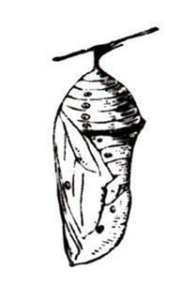 Everything dies, and everything has a new life. We may struggle to see how new life emerges from the life that has ended, but it does. Even in nature – as gentle and as brutal as nature can be – nothing is wasted; it just changes form.
 I did not learn that in church or in seminary; I learned it in physics class. My physics teacher was not Einstein, but a Jesuit priest, so he had a Christian outlook. He was also a scientist, a talented musician, and a gifted teacher. He demonstrated wave motion by sending us to the hallways and stairways with Slinky toys. To demonstrate the difference between voltage and amperage, he put himself directly in an electrical circuit at medium voltage with low amperage, until his usually tidy hair stood straight up. To model Jesus, he taught us with a view to who we might become, as another human being who took an interest in our development.
When Jesus put himself on the line for the ones he called, he held nothing back. He surrendered control to the One who sent him and gave his disciples, then and now, a clear sense of direction and the power of the Holy Spirit to continue his ministry. Ordinary human beings that we are, we take up that mantle knowing that although we may advance the cause, we cannot fulfill it in our lifetime.
 We can only give it our all. As the wisdom of the Talmud reminds us, “Do not be daunted by the enormity of the world’s grief. Do justly now. Love mercy now. Walk humbly now. You are not obligated to complete the work, but neither are you free to abandon it.”
The body of Christ, the church, takes on new forms and modes of expressing the good news in the natural order of things. Generations are born, grow to maturity, and give life to the next generation, each making the gospel and the church its own.
If we are lucky, the pandemic will keep getting more manageable, but not without forcing on all of us additional changes we did not choose or welcome. Church as we knew it – the ways we gather, communicate, celebrate and mourn – will never again be “church as we knew it.” We will recognize it. There will be enough continuity for that. And we will notice differences too. Some have already emerged. More will be required, and we will discern them together.
 “People talk about caterpillars becoming butterflies as though they just go into a cocoon, slap on wings, and are good to go. Caterpillars have to dissolve into a disgusting pile of goo to become butterflies. So if you’re a mess wrapped up in blankets right now, keep going.” – Jennifer Wright
On the very first Easter, the people closest to Jesus did not even recognize his resurrection body. We cannot know what our church, resurrected from the pandemic, will look like either. There will be enough continuity to say it is “the same,” but enough change to notice how it has changed.
Come, let us live into that future together!
In faith, with hope, for love,
Michael
From the Minister of Faith Formation
Dear Beloved of God,
I am about to do a new thing; now it springs forth, do you not perceive it?
I will make a way in the wilderness and rivers in the desert.
Isaiah 43: 19-21 (NRSV)
The Holy Season of Lent was for the early Christians – and is so for us as followers of Jesus – a wilderness time. A liminal space. A time where we seem to be on either side of a threshold with one foot in a space that isn’t quite over and the other foot in an anticipatory space not quite ready to begin.
Admittedly, I am not relaying anything you don’t already know when offering that for people around the world COVID, with all its variants, vaccines, and modifications to protocols partially define the wilderness time we are living in. Other world events do as well: the invasion of Ukraine, the continued humanitarian crisis in Syria, Yemen, Afghanistan, parts of Africa, Haiti, the plight of refugees at our southern border, climate crisis, racism, phobias of all types, etc.
From a spiritual perspective, Joyce Rupp writes: “the threshold provides a way to cross into a fuller life of spiritual depth and freedom.” 1
As human beings, we are presented with threshold experiences throughout our life time. Sometimes these experiences are typical life transitions: when we have mastered the ability to talk and walk and are less dependent upon others, when we start school, get our driver’s license, leave home, enter the workforce, marry, raise a family, retire. Sometimes the experience is occasioned by loss: declining health, the diagnosis of a life-threatening illness, the death of a loved one, a broken relationship, loss of employment, divorce. The latter examples are what Joan Chittister, a Benedictine sister, calls “unwilled change.” She states that “unwilled changed, which is accompanied by loss, has the ability to catapult us into becoming the rest of who we are.”
During this pandemic time, we have made necessary adjustments – unwilled changes, if you will – in our personal, professional, and church lives. We have had to adapt and, in many instances, re-invent much of what we were used to. There are among us those who long for a return to life and what used to be pre-COVID. There are among us those who anticipate and look forward to a new way of being. Church goers across denominations (including the UCC) wonder if their members will return to in person worship or prefer to worship via the hybrid format.
Around 2005, Phyliss Tickle, Brian McLaren, Marcus Borg, Diana Butler Bass and others spoke and wrote about “The Great Emergence,” happening in Christianity. Talk of Reformation entered the conversation with the observation that every 500 years the Church reviews the social and cultural changes and paradigm shifts happening and the impact they have on Christianity. The church universal has been looking at that for decades, particularly as Sunday morning attendance began to noticeably decline in the 70’s and 80’s. In many instances, denominations and churches made and continue to make faithful and prayerful adaptations.
Following up on the article in last month’s Spire and additional suggestions from our coach, your Thriving Congregations Team (Sarah Briggs, Sheri Cheung, Karen Pohlman, Melissa Mattison, Jim Stokes-Buckles, Michael McSherry, and Deb Moore) recently sponsored a discussion group based on the book Practicing Our Faith: A Way of Life for a Searching People edited by Dorothy Bass. The twelve Christian spiritual practices presented in the book offer congregations practices they might choose to engage as they navigate, adapt, and re-invent during this wilderness time of the changing landscape of being church.
As part of the Thriving Congregation Grant Initiative, through Vibrant Faith, congregations will be invited to experiment and re-invent (with funding available) one or more of the following areas:
- Worship.
- Learning ministries across the lifespan.
- Service and justice ministries and the people who participate with preparation and follow-up…how did they grow as Christians?
- Caring community relationships – how do we connect with people; what are the ways we manage relationships; how do we have hard conversations; how do we faithfully resolve conflict?
- Devotional/prayer life of individuals and groups.
The Thriving Congregations Initiative recognizes that the church is in a threshold time. How/what might the church, with Jesus as its head and we as disciples of Jesus, re-invent to thrive? Stay tuned for more from your Thriving Congregation Team.
John O’Donahue writes that “to acknowledge and cross a new threshold is always a challenge. It demands courage and also a sense of trust in whatever is emerging. This becomes essential when a threshold opens suddenly in front of us, one for which we had no preparation.” 2
Continued blessings as we journey through Lent to Easter,
Deb

- Rupp, Joyce. Open the Door: A Journey to the True Self. IN, Sorin Books. 2008, pg 94.
- O’Donahue, John. To Bless the Space Between Us. Doubleday, NY. 2008. pg 49.
To read the full SPIRE click here.