Dear Edwards Church Community,
 This is NOT a letter about Nellie, our new puppy. I am merely using her as a handy illustration. This IS a letter about timing, about recognizing where one is in a wider context, and checking our assumptions against changes in context. All that and how we dance with the movement of the Spirit.
Frances and I were talking about whether and when we might get a new dog even before the pandemic. We said good-bye to Maggie, our last dog, in July 2018 and were starting to feel ready around Christmas 2019. Late spring 2020 was our tentative timing, but then last spring competition for rescue dogs and puppy sales skyrocketed. We need any furry companion to be one that will not trigger an allergy. Having comfortably shared our home with one Wheaten terrier for years, we knew that could work. After trying for months to adopt a hypo-allergenic rescue dog, we took the plunge with a breeder.
The last time we brought a puppy into our lives was 16 years ago, when we had three teenagers still in the house. Now we’re in our mid 60’s and those teens all have homes and pre-pandemic dogs of their own. Bringing a puppy into our lives this time is both harder and easier. Harder because we’re a little older and there are fewer helping hands. Easier because we’re a little older and have done this before. We approach it with more patience and experience, in part because we must, but we are also wiser and more efficient.
 Think back to February 2020, back before the sudden lock downs, the widespread fear of the novel Corona virus sweeping the globe, and the spontaneous outbursts of gratitude for essential workers. Do you remember wondering if it were possible to develop and deploy even one safe and effective vaccine in under a year? Do you remember not having to worry about “variants” or “mask shaming”? We were not naïve. We simply had not yet learned how to survive and then thrive under these new circumstances. We are all still learning and, with God’s help, we will be still learning for as long as we live.
The world knows more than it did during the pandemic of 1918, but none of us have been in this situation before. Most of us have had to work through serious challenges in our personal lives and most of us have lived through serious challenges to our social, economic, and political systems – but usually not all at once. Science has evolved immensely in the last century. What about human beings and our systems?
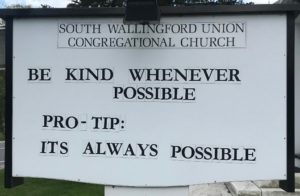 The pandemic has taxed all of us, sometimes in ways that we have in common and sometimes in ways unique to our lot in life. Most of us now just want relief in some form. Relief from fear, which might come from being vaccinated, assuming that being vaccinated is safe for you and available to you. Children under 12 are still not eligible, and even for some who are technically eligible, the vaccines may not be safe or effective for a variety of reasons. Relief may come in a return to some sort of normalcy, but the path to that normalcy may not be the same for all.
During the pandemic, I have often been reminded of two things. First was the importance of remembering that – unless they tell me – I have no idea what someone else has been through, either that day or in their life before that day, so tread gently. The other was that extreme pressure, like the pressure of the last year, can expose and even deepen preexisting flaws.
The flaws we find in each other we may choose to take in stride or address as firmly or gently as the context requires. Bryan Stevenson, the deeply compassionate advocate who wrote Just Mercy, which chronicles his work as a death row lawyer, and founded the Equal Justice Institute (eji.org) in Montgomery, AL, reminds us that none of us is as bad as the worst thing we have done. His life’s work with those on death row has also taught him how each person’s fate is linked to others’. So he counsels forgiveness while practicing an unflinching pursuit of equal justice for all.
Deb reminds us, in her letter, that we are now in the season after Pentecost, that period of the liturgical year and, indeed, that period of human history when we have been given the Spirit to guide and support us. While we work toward a new way of being together, a way sufficiently like what we were used to so that it gives us comfort, and a way sufficiently new so that we can be assured we are not rushing to “get over” and get past the more painful lessons of the pandemic, let us be guided and encouraged by all the gifts the Spirit offers.
In faith, with hope, for love,
Michael
From the Minister of Faith Formation
Dear Beloved of God,
Praying1 by Mary Oliver
It doesn’t have to be
the blue iris, it could be
weeds to a vacant lot, or a few
small stones, just
pay attention, then patch
a few words together and don’t try
to make them elaborate, this isn’t
a contest but the doorway
into thanks, and a silence in which
another voice may speak.
According to scripture, the Pentecost event was anything but silent. Rushing, violent, wind, tongues like fire and many voices speaking as the Spirit moved in, around, and through those gathered at this event celebrated as the birth of the church. Moving into the Season after Pentecost – the longest season of the liturgical year – we move into a season noted as a time of growth. Spiritual growth as individual disciples of Jesus, and as a pan-generational faith community of Jesus’ disciples walking together living into baptismal promises made and affirmed.
This year, the Season after Pentecost will coincide with the season after COVID-19 protocols. It will be important to reflect as individuals, as families, as a faith community where the blue irises, the vacant lots, the losses, the thanksgivings we experienced were as we continue to grow into whatever new way God may be opening us to.
The first line of three stanzas one of my favorite reflections around listening begins: “When someone deeply listens to you..” Your Thriving Congregation Team (Sarah Briggs, Sheri Cheung, Melissa Mattison, Karen Pohlman, Jim Stokes-Buckles, Michael McSherry and Deb Moore) has been engaged in empathic listening with cohorts of this Lilly Grant Initiative and with each other. Empathic listening engages listening deeply to others, not to respond and not to pass judgment. It is listening to understand, to listen for the holy in ourselves and others, and God’s still speaking voice in all of it.
Over the summer, as part of the Thriving Congregations Initiative, your team will begin some listening sessions in person or via Zoom, engagement through social media and interviews within the community. Here is what is scheduled for congregational input during July either in person/or via Zoom: July 6 @ noon; July 13 @ 7:00 p.m; July 15 @ 7:00p.m.; July 18 @ 11:30 (Zoom). In August, we will engage social media input and in September community engagement. Focus questions during this time of empathic listening will center around longings/losses, hopes/dreams/what is providing meaning/feeding your spirit during this time. Please email Deb Moore: ffminister@edwardschurchnorthampton.org for more information and to sign up for a July listening session.
These conversations are doorways into the crossroads of ancient faith and contemporary culture as well as where God would have us serve as instruments of love and justice in the midst of the world’s joys and suffering towards becoming a thriving congregation as we travel through the Season after Pentecost – a season of growth – in the coming months and beyond with the guidance of the Holy Spirit moving in, through, and around us.
Blessings,
Deb
1) Oliver, Mary. Thirst
2) Fox, John. When Someone Deeply Listens to You.
To read the full SPIRE click here.